The blog and website genre is a difficult topic to analyze due to the vast range of both topics and interpretations that are associated with each individual work. There are many variants that cause differences in structure, order, and the various components between works. The unbreakable conventions of a blog include columns, headers, sub-headers, images, and short paragraphs. The breakable conventions include lists, differing fonts, and using all capital letters for emphasis. The use of APAC and CHAT can be utilized through the analysis of the author. An author of a blog is anyone who has something to express about themselves or their interest. The author’s activity and the production process begin when they use a computer to create a blog. They create a blog by finding a site, brainstorming ideas, and turning them into separate post and topics. A blog is distributed via the internet and the audience is anyone who is interested in the given topic. The audience must have access to the internet in order to view the blog, and the socialization aspect is found as people begin to talk about the blog in their personal lives. Blogs can be received in many ways through education, politics, and hobbies. The topics can be very diverse and generally allow for many different purposes on different topics and for different reasons. Due to blog diversity, there are many multimodal aspects. In blogs, there are visual, aural, spatial, linguistic, and sometimes gestural that can be found in videos. The visual aspects are found in the colors and fonts of the blog, while the spatial element is found in the layout of the blog. The linguistic aspect is found in the vocabulary, while the aural aspect can be found in the music and sounds in a video. The gestural aspects can be found in a video or in the feeling received by the blog as a whole. For my writing process, I began first by researching blogs and finding examples. After I had researched some nature blogs, I then researched some of the unbreakable and breakable conventions. Finally, I began brainstorming ideas and topics that I then turned into this blog. The entire process was really fun and I enjoyed writing it, as I have a deep passion for nature and conservation. I really enjoyed the freedom within this project and the ability to make my own website. It was a fun project to close this semester with. Overall, the project was very interesting, fun, and I enjoyed writing it.
Author: matthewnugent1
Wildlife on Campus
The state of Illinois is home to thousands of species of plants and animals, as well as thousands of people. Wildlife and humans have survived alongside each other for the entirety of human history through the modern day. Today, many species are threatened with extinction due to direct human actions. Humans are altering ecosystems and environments through over-fishing, deforestation, poaching, and pollution. The vast majority of organisms are beginning to decrease in number, however, a select few are doing just fine, or even thriving. As human urbanization and influence increasingly expand into the few wild spaces left, animals are forced to either adapt, migrate, or die. Adaption and evolution take thousands of years and the option of migration is beginning to disappear as well as there are fewer wild spaces left each year. Unfortunately, as human influence expands, many animals lose habitat and cannot sustain themselves ultimately perishing. However, on the bright side, there are few animals that have adapted perfectly to survive around humans. For example, if you were to take a walk on the campus quad and if you know where to look, you could find a great diversity of life. Many mammals such as squirrels, rabbits, raccoons, opossums, and even coyotes feel right at home in the midst of suburbia. Not just mammals, but dozens of species of birds, insects, snakes, and amphibians may call our campus home. There are many studies that have found that entire coyote packs are thriving in Chicago, denning up in drainage ditches. Raccoons, opossums, and skunks are thriving in alleys and under foundations, and even bears and wolves are beginning to wander in from Wisconsin. Here at Illinois State University, we are lucky enough to have an arboretum where there is a great diversity of plant and tree species. Mixed in with the mixture are quite a few natives such as oaks, maples, pawpaw trees, and the Kentucky coffee tree. These native trees offer shelter and food for bats, birds, insects, and smaller mammals. As the suburbs continue the spread, many species cannot adapt and die off while others may learn to thrive. The tamed, manicured, and seemingly domesticated suburbs are really teeming with wildlife lurking in the shadows and cracks doing just fine under our noses.
Source: “How Wild Animals Are Hacking Life in the City.” National Geographic, National Geographic Society, 18 Apr. 2016, news.nationalgeographic.com/2016/04/160418-animals-urban-cities-wildlife-science-coyotes/.
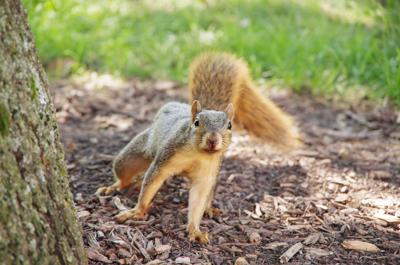
A fox squirrel on the Illinois State University Quad.
Source: ELLEN CELSKE | Features Reporter | @ellencelske. “A Day in the Life of an ISU Squirrel.” Videtteonline.com, 19 Sept. 2016, http://www.videtteonline.com/features/a-day-in-the-life-of-an-isu-squirrel/article_a4ea42c0-7dda-11e6-a253-9ff2f4f2e728.html.
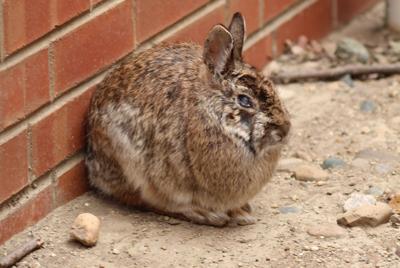
Eastern Cotton-tailed rabbit on the Illinois State University Quad
Source: Davis, Rebecca. “No Bunny Business: Interacting with Quad Bunnies Could Be Hazardous.” Videtteonline.com, 24 Mar. 2016, http://www.videtteonline.com/features/no-bunny-business-interacting-with-quad-bunnies-could-be-hazardous/article_57abeffe-f126-11e5-8567-4b7030e5c727.html.
Backyard Prairies
The prairie ecosystem historically covered over 150 million acres ranging from the western Rocky Mountains to the eastern forests near the Mississippi River. The prairie ecosystem spread from the north in Saskatchewan to south in Texas. The Prairie ecosystem was the dominant ecosystem in North America up until the mid-1800s. The prairie ecosystem is one of the most diverse with about 50-60 types of grasses and about 300-400 forbs. Prairies covered many different types of landscapes, with different soils, and many extreme weather conditions. Prairies could face periods of drought, flooding, extreme heat, and extreme cold. Prairies often times were faced with fire and some species rely on fire in order to complete their reproduction cycles. Another challenge to prairies was the intense grazing of elk, deer, bison, and pronghorn antelope. These native prairie plants have evolved over time to survive the extremes by producing most of their biomass, around 75%to 80%, below the soil where the temperatures are fairly constant and the above ground threats are not dangerous. However, today the prairie ecosystem covers at most 2% of its original landmass. As the prairie diminishes, so does its flora and fauna. Without the prairie, many species of birds, small mammals, and insects have begun to decline as well. You can help preserve this ecosystem by planting a back yard prairie. A backyard prairie can be very easy to plant and can offer countless hours of enjoyment. A native prairie will provide microhabitats and rest stops for native species that are either living in them or that are just passing through. Big bluestem, one of the most common native grasses, provides food and cover for many birds and animals. By planting big bluestem you can also get enjoyment out of its fall color and structure. Another great backyard prairie plant is a cardinal flower. Cardinal flower is a favorite of hummingbirds and provides food for many pollinators. It is a very attractive bright red flower that also has a strong sweet scent. Another great choice for a backyard prairie is the purple coneflower. The purple coneflower is a great source of food for pollinators and also very aesthetically pleasing to the home gardener. Making a backyard prairie can be quite a deal of fun and allow for people to reconnect with nature and help to educate others. In the rapidly expanding and globalizing world, nature is facing more dangers and destruction and every little bit can help. A backyard prairie may not save the bison, but it sure will help the insects, snakes, and birds.
Sources: “Tallgrass Prairie Center.” Tallgrass Prairie Center, 1 May 1970, tallgrassprairiecenter.org/.
“A Complex Prairie Ecosystem.” National Parks Service, U.S. Department of the Interior, http://www.nps.gov/tapr/learn/nature/a-complex-prairie-ecosystem.htm.
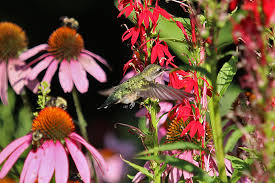
A ruby-throated hummingbird feeding on cardinal flower and purple coneflower.
Picture provided by: Back Yard Biology, bybio.wordpress.com/tag/archilochus-colubris/.
Bison Returning to Illinois!
The American bison used to number around 30 to 50 million across the great plains of North America. However, they were hunted to near extinction in the late 19th century. Today, bison are considered ecologically extinct, meaning they no longer perform their ecological roles in the environment. Bison are a keystone species of the prairie ecosystem, meaning many other animals and plants rely on bison in order to survive. Bison moved constantly grazing in large herds, leaving behind dung that was food for insects, which in turn became food for other organisms. Bison also have a wallowing behavior, when they take dust baths they roll in the dirt creating hard compacted dirt that holds water after a rainfall. These depressions allow for frogs and other amphibians to lay eggs. However, thanks to many conservationists, bison are making a comeback. today there is around 500,000 bison across North America. Unfortunately, the majority of these bison were crossbred with cattle and are no longer considered true wild bison. Only around 30,000 genetically pure bison still remain and even less are truly wild and free roaming. These numbers continue to grow each year thanks to conservationist and wildlife agencies. In Illinois, the first bison calf was born in 2015 after nearly 200 years of absence. Illinois has finally had the return of bison to its prairies and this bison can be found in a few wild places throughout the state. The Nachusa Grasslands in Franklin Grove features 3,500 acres owned by the Nature Conservatory and hosts a herd of genetically pure bison. The Warrenville Fermilab also contains a herd of bison that live a semi-wild life. The third area to see wild bison in Illinois is the Midewin National Tallgrass Prairie. Midewin hosts a 19,000-acre reserve with a free-roaming herd of bison. In combination with private bison farmers, Illinois beginning to grow its herd and hopefully one-day bison will be able to reclaim their ecological roles on the Illinois prairie.
Sources:
“Bringing Back the Bison: 3 Places to See Bison in Illinois.” Chicagotribune.com, 12 July 2015, http://www.chicagotribune.com/suburbs/batavia-geneva-st-charles/community/chi-ugc-article-bringing-back-the-bison-3-places-to-see-biso-2015-07-11-story.html.
“Basic Facts About Bison.” Defenders of Wildlife, 10 Jan. 2019, defenders.org/bison/basic-facts.

Wild Bison at the Nachusa Grasslands managed by the Nature Conservatory.
Source: “Bison Viewing.” Friends of Nachusa Grasslands, http://www.nachusagrasslands.org/bison-viewing.html.
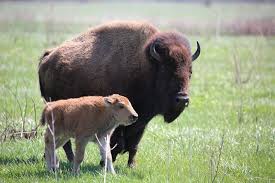
Wild Bison with a calve at the Midewin National Tall-Grass Prairie.
Source:
ORTIZEmailFollow, ALEX. “Baby Bison – Midewin National Tallgrass Prairie Announces First Bison Calf Birth of Season.” News, http://www.theherald-news.com/2019/04/30/baby-bison-midewin-national-tallgrass-prairie-announces-first-bison-calf-birth-of-season/ax9zo3q/.
Save the Monarchs!
The monarch butterfly, Danaus plexippus, is a native butterfly species found in Illinois and North America. It is very important to the prairie ecosystem, as it has an interdependent relationship with the milkweed family, Asclepias. Monarchs are an interesting species as they complete an annual migration from all over North America to Mexico and California. These butterflies begin their 3,000-mile long mass migration as the fall season and colder weather begins. What is incredibly interesting, is that no one butterfly completes the entire migration. As the summer stretches, the monarchs have multiple generations that die out and are born allowing the species to migrate south slowly over the course of the summer. This great natural spectacle is in great danger because monarchs as a species, and the eastern population especially, are in a rapid decline. Many environmental scientists and conservationists are worried that monarchs may soon become extinct. The main reason for this decline is due to the monarchs reproduction cycle. Monarchs are a specialist species that can only reproduce with the help of the Milkweed family, Asclepias. As the great plains have been converted to agricultural land and other human developments, the hundreds of native prairie species, especially the prairie plants disappeared as well. As their diverse habitats disappeared, including their host and feed plants, and were replaced with mono-agricultural row crops, the monarchs had begun their rapid declined. This loss of habitat combined with an increase in pesticides and insecticides have decimated monarch populations. Combing problems in their summer range of North America, with habitat destruction in the forest of northern Mexico and southern California, our monarchs are facing threats all over their natural habitats. If we want to keep these beautiful species around for the enjoyment of many more generations, we need to make some drastic changes. We need to stop using pesticides, insecticides, and most importantly restore monarch habitat. You can help by planting milkweed and native flowering plants at home or by supporting legislation to decrease the widespread use of insecticides. Monarchs are truly beautiful and iconic species of the prairie and it would be detrimental to the prairie ecosystem as a whole if these important pollinators went extinct.
Sources: “Monarch Butterfly.” National Geographic, 21 Sept. 2018, http://www.nationalgeographic.com/animals/invertebrates/m/monarch-butterfly/.
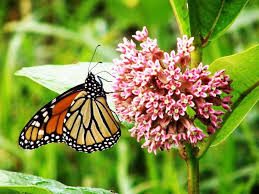
A Monarch Butterfly feeding on Common Milkweed.
Picture provided by: “How Home Gardeners Can Save The Monarch Butterfly ⋆ Big Blog Of Gardening.” Big Blog Of Gardening, 28 May 2018, http://www.bigblogofgardening.com/home-gardeners-can-save-the-monarch-butterfly-with-milkweed/.
A monarch caterpillar feeding on a common milkweed host plant.
Picture provided by: Lindwall, Courtney. “Monarch Butterflies Get a Head Start in the Schoolyard.” NRDC, 12 Mar. 2019, http://www.nrdc.org/stories/monarch-butterflies-get-head-start-schoolyard.
What Is Conservation Biology?
Conservation biology is defined by the Merriam-Webster dictionary as “the planned management of a natural resource to prevent exploitation, destruction, or neglect.” Conservation Biologist is well rounded in the natural sciences and they take courses in geology, biology, zoology, botany, and many other areas. A conservation biologist will work with government agencies, private landowners, and conservation organizations to help mitigate the problems associated with human activity and expansion. In Illinois, conservation biologists work with state parks and forest preserves to help with replanting native species, prescribing controlled burns, and helping to regulate public hunting lands and hunting limits. In my hometown of Orland Park, the Cook County Forest Preserve has hired conservation biologists to help restore the Orland Grasslands. In 2002, the county had purchased 960 acres of farmland and transformed them back into a native prairie, savannah, and oak forests. The Orland Grasslands allow for native prairie species, most becoming increasingly rarer and rarer, a chance to thrive in their natural habitat. Conservation biologists worked with other environmentalists and volunteers to reintroduce native plants and reshape the topography, allowing for streams, wetlands, and marshes to reclaim the land. I hope to one day be able to use my skills learned here at Illinois State University, to help restore and preserve hundreds of acres and recreate the prairie habitat that now only currently holds about 1 percent of its historic range.

One of the many scenic views of the Orland Grasslands featuring many reintroduced native plants, such as rattlesnake master and wild bergamot.
Source: Orland Grasslands
Sources:
“Orland Grassland.” Forest Preserves of Cook County, fpdcc.com/orland-grassland/.
“Conservation.” Merriam-Webster, Merriam-Webster, http://www.merriam-webster.com/dictionary/conservation.
“Biology – Conservation Biology.” Biology – Conservation Biology Major | Illinois State University, illinoisstate.edu/academics/conservation-biology/.
Rebirth of the Prairie Plants
Spring is finally around the corner and coming soon to Illinois. These last few weeks have brought warmer temperatures, some nice sunlight, and a lot of rain. For most of us, spring is a time when we can finally begin to get back into the outdoors and enjoy nature. If you look closely around outside, you’ll start to see a rebirth of life all around. For example, a lot of our native plants are beginning to sprout. In the first picture, Common milkweed is beginning to sprout. This is a very important native plant as it offers food and is a host plant for monarch butterflies and other pollinators. The Milkweed Bug uses common milkweed as a host plant as well and cannot survive without it. In the second picture, Rattlesnake Master is beginning to sprout. This plant is also a very important native plant as it adds to local biodiversity and is a feed plant for native pollinators. In the third picture, Wild Bergamot is beginning to show its face. Wild bergamot is an important native species as it provides food for many species of bees, butterflies, and even hummingbirds. The fourth and final picture is Butterfly Weed. This native species is in the same family as common milkweed and serves as a host and feed plant for monarchs. Spring is a great time of year as many plants and animals are beginning to come out of hibernation and enjoy the warmer weather just like us.
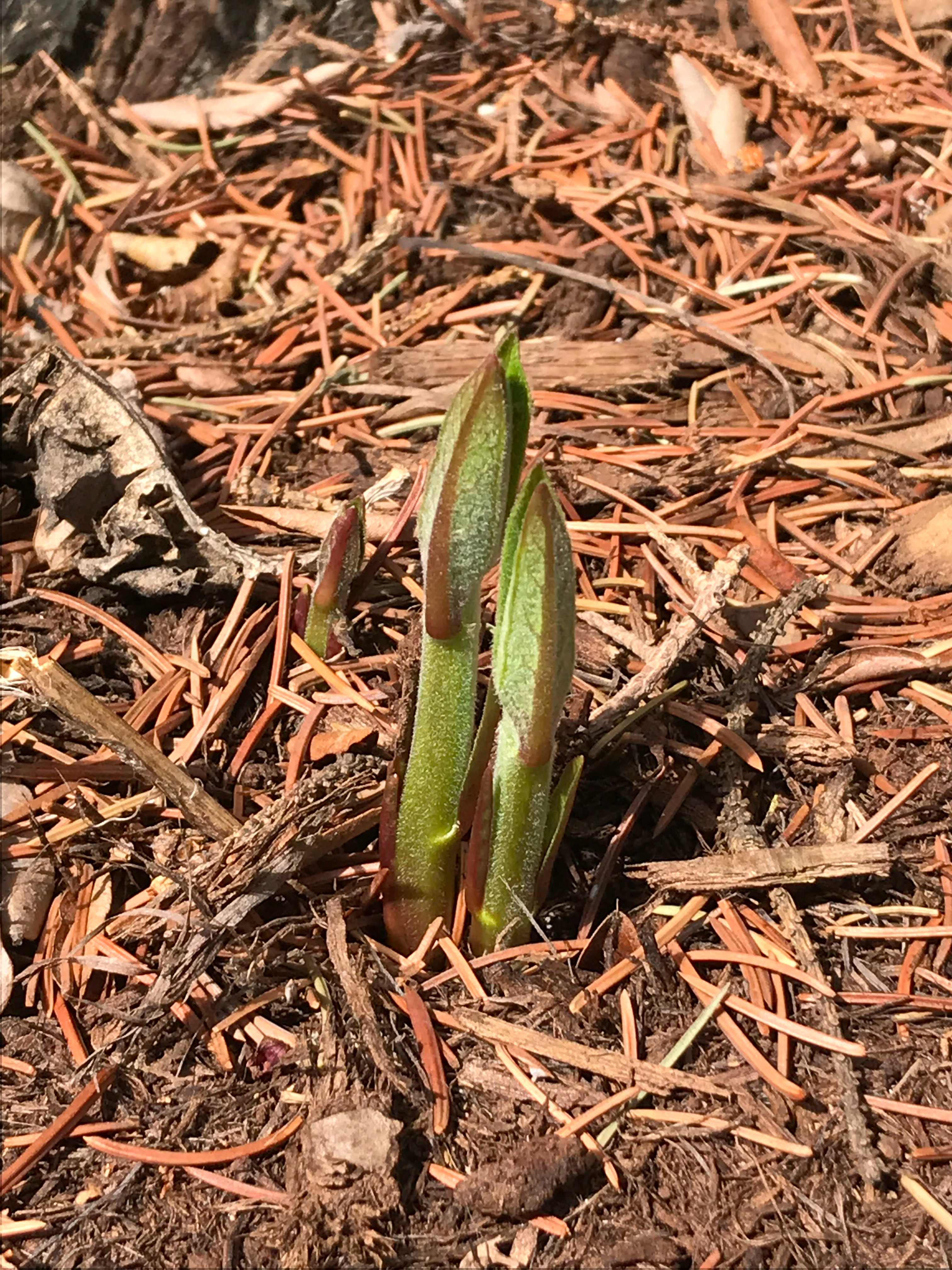
Common Milkweed, Asclepias Syriaca, beginning to sprout in my backyard.
Source: Taken in my backyard by myself.
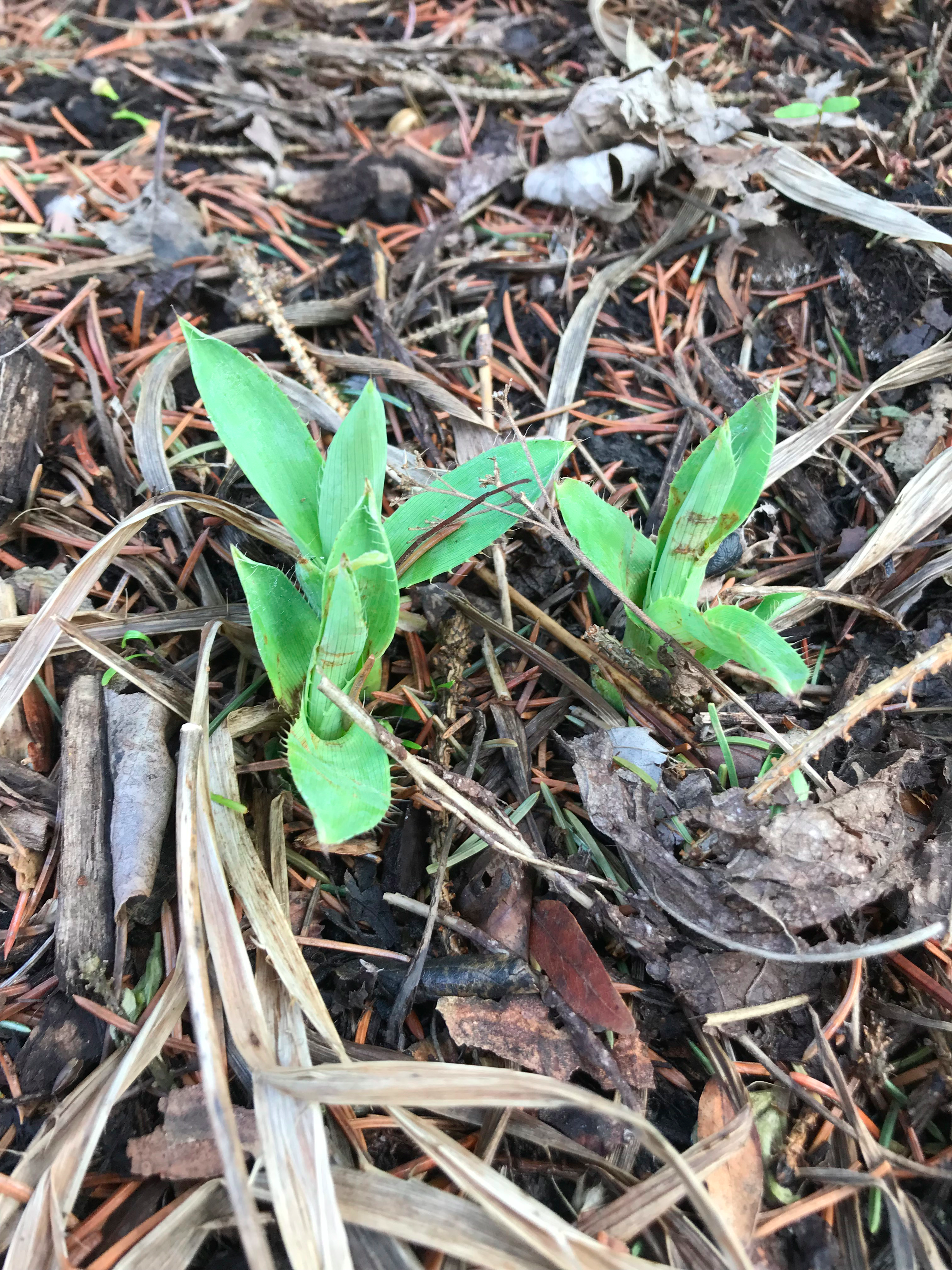
Rattlesnake Master, Eryngium yuccifolium, is just beginning to pop up with its unique spike-edged leaves.
Source: Taken by me in my backyard
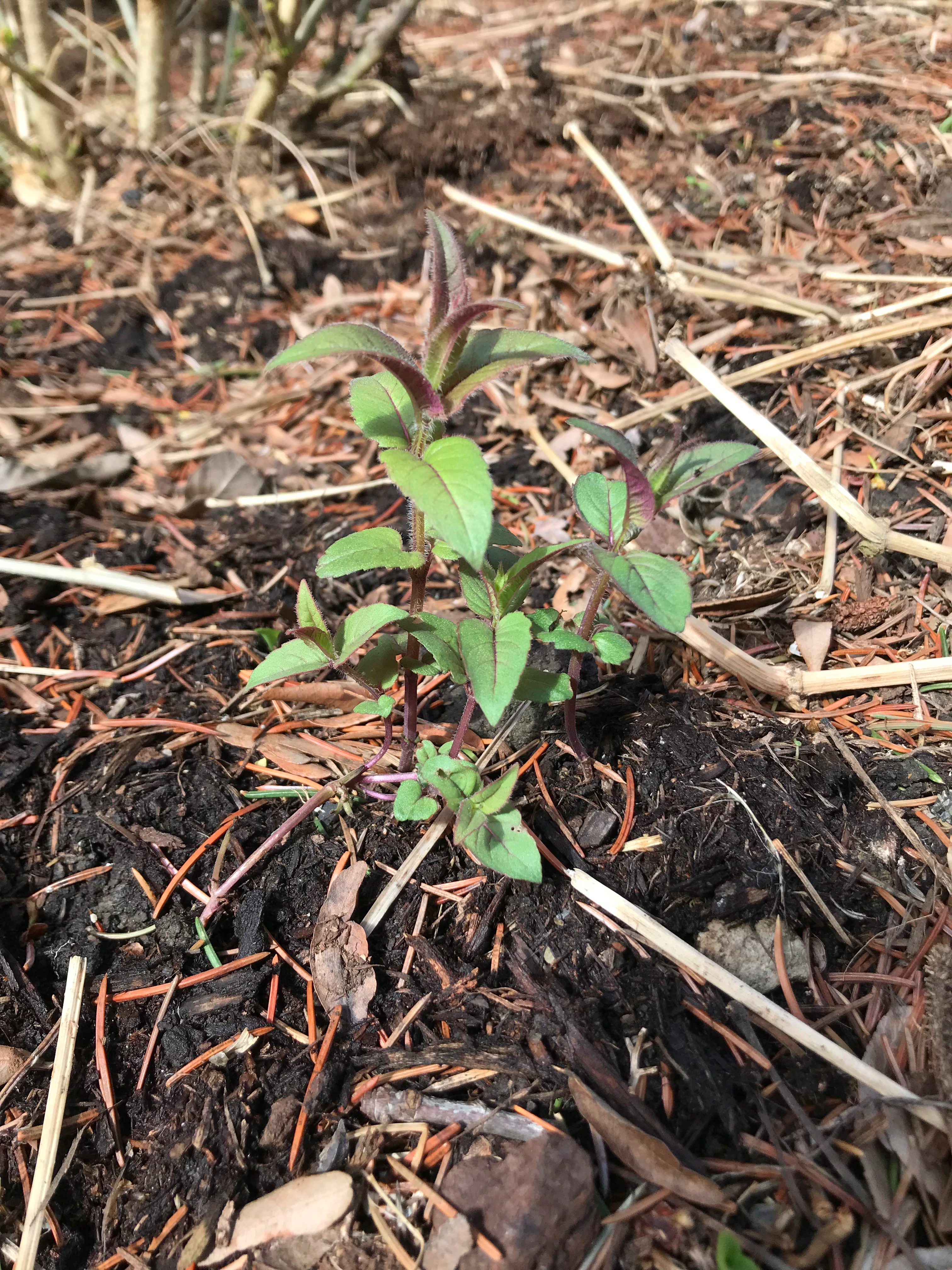
Wild Bergamot, Monarda fistulosa, is a relative of European bee balm and is also beginning to show itself after this long brutal winter.
Source: Taken by me in my backyard
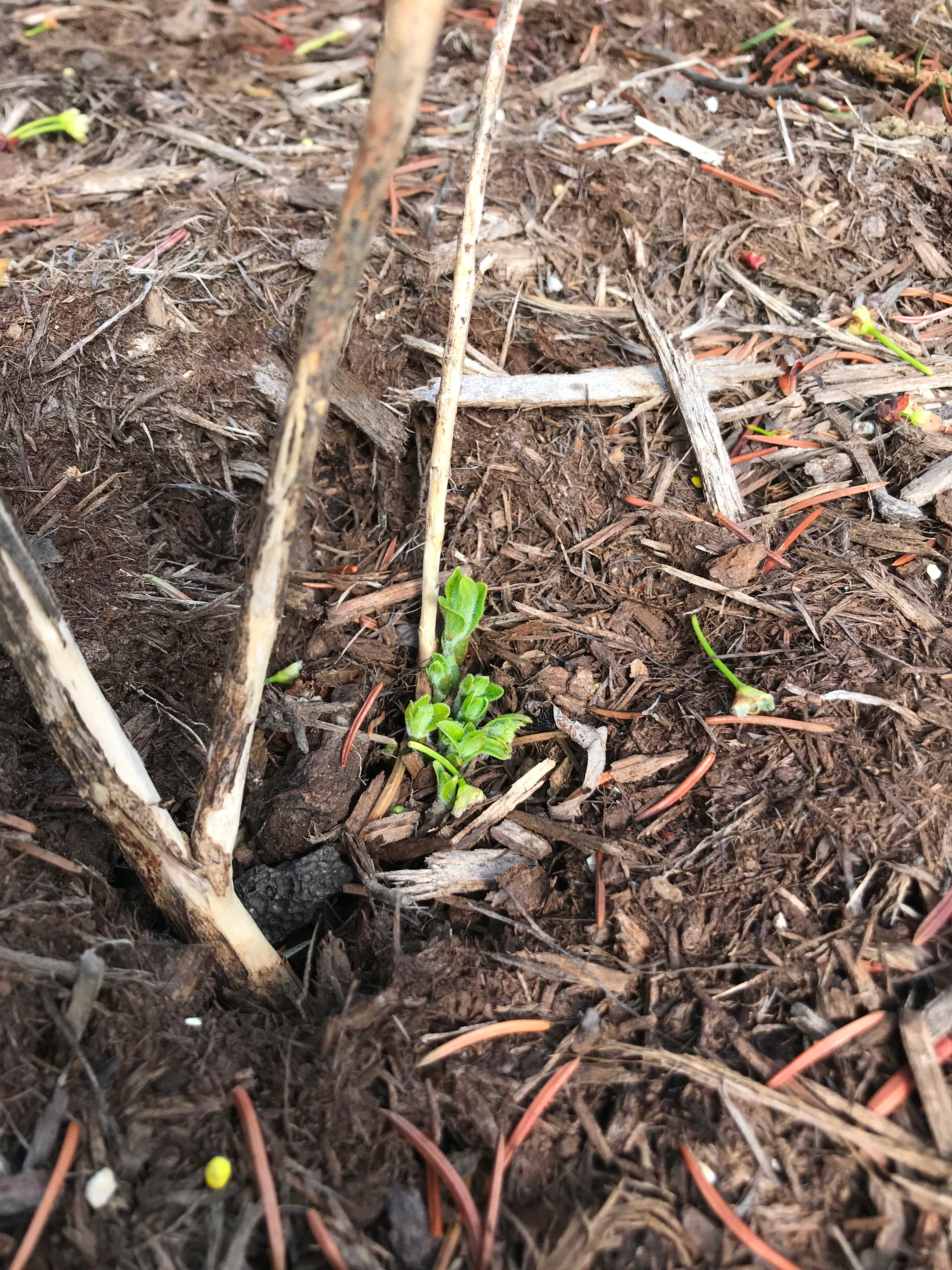
Butterfly Weed, Asclepius tuberosa, a member of the milkweed family “Asclepias” is just emerging a little late this year possibly due to the brutal cold this winter.
 Conservation Biology