The state of Illinois is home to thousands of species of plants and animals, as well as thousands of people. Wildlife and humans have survived alongside each other for the entirety of human history through the modern day. Today, many species are threatened with extinction due to direct human actions. Humans are altering ecosystems and environments through over-fishing, deforestation, poaching, and pollution. The vast majority of organisms are beginning to decrease in number, however, a select few are doing just fine, or even thriving. As human urbanization and influence increasingly expand into the few wild spaces left, animals are forced to either adapt, migrate, or die. Adaption and evolution take thousands of years and the option of migration is beginning to disappear as well as there are fewer wild spaces left each year. Unfortunately, as human influence expands, many animals lose habitat and cannot sustain themselves ultimately perishing. However, on the bright side, there are few animals that have adapted perfectly to survive around humans. For example, if you were to take a walk on the campus quad and if you know where to look, you could find a great diversity of life. Many mammals such as squirrels, rabbits, raccoons, opossums, and even coyotes feel right at home in the midst of suburbia. Not just mammals, but dozens of species of birds, insects, snakes, and amphibians may call our campus home. There are many studies that have found that entire coyote packs are thriving in Chicago, denning up in drainage ditches. Raccoons, opossums, and skunks are thriving in alleys and under foundations, and even bears and wolves are beginning to wander in from Wisconsin. Here at Illinois State University, we are lucky enough to have an arboretum where there is a great diversity of plant and tree species. Mixed in with the mixture are quite a few natives such as oaks, maples, pawpaw trees, and the Kentucky coffee tree. These native trees offer shelter and food for bats, birds, insects, and smaller mammals. As the suburbs continue the spread, many species cannot adapt and die off while others may learn to thrive. The tamed, manicured, and seemingly domesticated suburbs are really teeming with wildlife lurking in the shadows and cracks doing just fine under our noses.
Source: “How Wild Animals Are Hacking Life in the City.” National Geographic, National Geographic Society, 18 Apr. 2016, news.nationalgeographic.com/2016/04/160418-animals-urban-cities-wildlife-science-coyotes/.
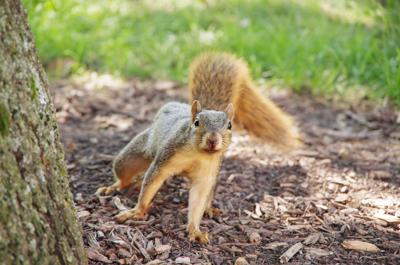
A fox squirrel on the Illinois State University Quad.
Source: ELLEN CELSKE | Features Reporter | @ellencelske. “A Day in the Life of an ISU Squirrel.” Videtteonline.com, 19 Sept. 2016, http://www.videtteonline.com/features/a-day-in-the-life-of-an-isu-squirrel/article_a4ea42c0-7dda-11e6-a253-9ff2f4f2e728.html.
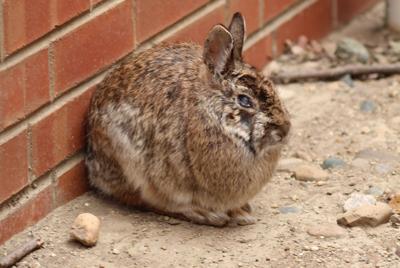
Eastern Cotton-tailed rabbit on the Illinois State University Quad
Source: Davis, Rebecca. “No Bunny Business: Interacting with Quad Bunnies Could Be Hazardous.” Videtteonline.com, 24 Mar. 2016, http://www.videtteonline.com/features/no-bunny-business-interacting-with-quad-bunnies-could-be-hazardous/article_57abeffe-f126-11e5-8567-4b7030e5c727.html.

 Conservation Biology